
TMJ & Jaw Care
A careful approach to jaw comfort and function.
Jaw-joint and muscle symptoms can have more than one cause. Dr. Shay begins with a detailed evaluation before discussing whether treatment, observation, or coordinated care is appropriate.
One Working System
The joints, discs, and muscles work together.
Each jaw joint pairs a rounded condyle with a small cushioning disc, guided by the surrounding muscles. Discomfort can arise from any part of this system, which is why evaluation comes before treatment.
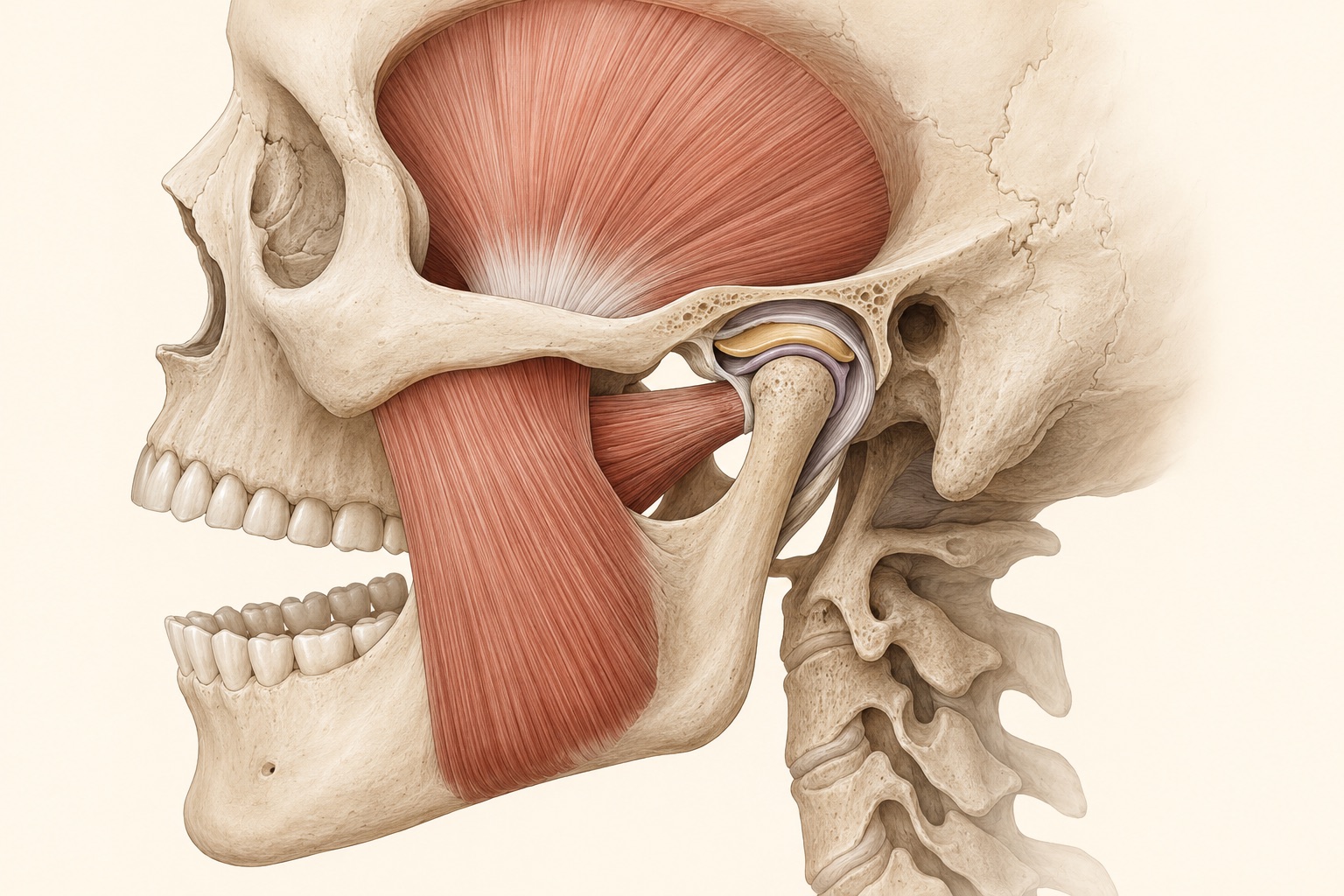 TemporalisMasseterLateral pterygoidArticular discMandibular condyle
- Temporalis
- Masseter
- Lateral pterygoid
- Articular disc
- Mandibular condyle
Symptoms
When an Evaluation May Be Helpful
- Persistent jaw-joint or muscle discomfort
- Limited opening or episodes of locking
- Painful clicking or popping
- Jaw fatigue or discomfort while chewing
- Facial or neck discomfort associated with jaw use
- A noticeable change in how the teeth meet
Clicking or popping without pain or limited movement is common and may not require treatment. An evaluation is most useful when symptoms are painful, persistent, changing, or interfering with normal function.
The Evaluation
What a Careful Evaluation Considers
Your History
When the symptoms began, where they occur, what affects them, and whether other pain, health, or medical concerns may need to be considered.
Jaw Movement and Muscles
Range of motion, tenderness, joint sounds, muscle discomfort, and any limitations during normal jaw function.
Teeth and Restorations
Wear, fractures, missing teeth, and existing restorations may be examined without automatically assuming that they caused the symptoms.
Imaging or Referral
Imaging or collaboration with an orofacial-pain clinician, physician, physical therapist, or another specialist may be recommended when the findings indicate it.
If Treatment Is Appropriate
A Conservative, Step-by-Step Approach
- 01
Understand the Source
Care begins with the history, clinical examination, and diagnostic records that are appropriate for the individual concern.
- 02
Begin Conservatively
Observation, self-management guidance, or reversible appliance therapy may be considered when the evaluation supports it. A nightguard is not automatically recommended for every patient.
- 03
Coordinate Care When Needed
Physical therapy, medical evaluation, imaging, or specialist referral may be appropriate when symptoms extend beyond restorative dentistry.
Restorative treatment is not automatically recommended for jaw symptoms. When damaged teeth, significant wear, or failing restorations also require care, Dr. Shay considers jaw comfort and function as part of the larger restorative plan.
Good to know
Questions about TMJ & jaw care
No. Clicking or popping without pain, limited movement, or locking is common and often does not require treatment. An evaluation may be helpful when joint sounds are painful, newly developing, changing, or accompanied by difficulty opening or using the jaw normally.
Dr. Shay reviews the history of the symptoms and examines jaw movement, muscles, joint sounds, teeth, wear, and existing restorations. The goal is to understand the clinical picture without assuming that one finding caused the symptoms. Imaging or referral is recommended only when appropriate.
No. An appliance may be considered when the examination supports a specific purpose, but it is not automatically recommended for every patient. Dr. Shay first evaluates the symptoms, tooth wear, restorations, jaw function, and other relevant findings before discussing whether appliance therapy may be helpful.
Imaging may be recommended when the history and examination indicate that additional information is needed. Referral or coordinated care may also be appropriate when symptoms involve persistent pain, limited movement, locking, trauma, or concerns that extend beyond restorative dentistry.
Yes. When teeth or restorations independently require treatment, jaw comfort and function can be considered as part of the restorative plan. Restorative treatment is not automatically recommended solely because a patient has jaw symptoms.
Related Care
Full-Mouth Rehabilitation Crowns & Bridges Dentofacial Harmony
Next Step
Jaw symptoms deserve a careful starting point.
An evaluation can help clarify what may, or may not, require treatment.